
TL;DR:
- Compliance in adult finance involves adhering to laws that protect vulnerable adults and ensure business legality. It is essential for maintaining banking access, investor confidence, and long-term success in high-risk sectors.
Compliance in adult finance is the practice of adhering to financial laws and regulations designed to protect vulnerable adults, uphold financial integrity, and keep businesses legally operational. For business owners and financial executives in high-risk sectors, including adult entertainment, iGaming, crypto, and forex, the role of compliance in adult finance is not a background function. It is the foundation on which banking access, investor confidence, and long-term viability rest. Regulatory bodies such as the Financial Conduct Authority (FCA), the Consumer Financial Protection Bureau (CFPB), and the Financial Crimes Enforcement Network (FinCEN) set the standards that define whether your business survives scrutiny or faces enforcement action.
What financial regulations govern adult finance?
Adult finance operates under a web of overlapping regulatory frameworks, each targeting a specific risk. Understanding which rules apply to your sector is the first step toward building a defensible compliance position.
The most relevant frameworks for high-risk financial businesses include:
- AML/BSA frameworks. The Bank Secrecy Act (BSA) requires firms to detect, report, and prevent money laundering. FinCEN enforces this across all financial service providers, including those serving adult sectors.
- FINRA Rule 2165. This rule enables firms to place temporary holds on disbursements for vulnerable adults: 15 business days initially, extendable to 25 and then 55 days with regulatory involvement. This is a direct protection mechanism built into adult finance regulation.
- FCA Consumer Duty. The FCA requires firms to act honestly, treat customers fairly, and support consumers throughout their financial relationship. This applies to any firm operating in or into the UK market.
- GDPR and data protection law. Adult businesses handling personal financial data face strict obligations under the General Data Protection Regulation, with fines tied to global turnover.
- PSD2 and payment services regulation. Firms processing payments in the EU must comply with the Payment Services Directive, which governs authentication, fraud prevention, and transaction reporting.
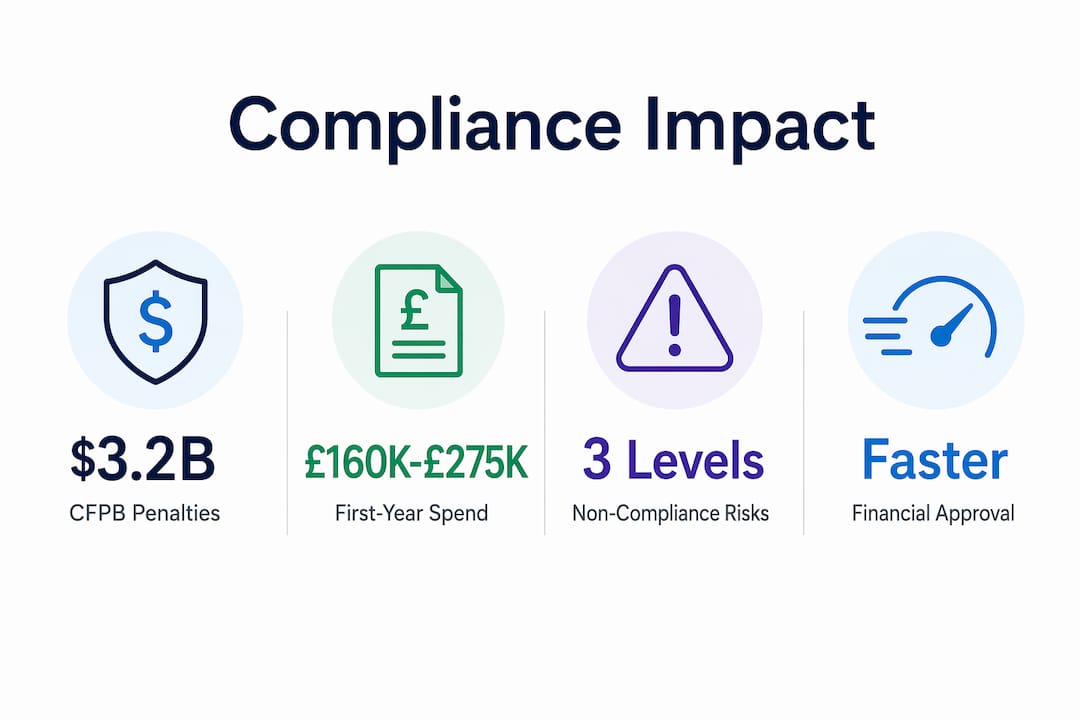
The enforcement consequences are not theoretical. In 2023, the CFPB collected over $3.2 billion in penalties, and FinCEN collected over $2 billion in BSA/AML fines against fintech-related firms. Those figures confirm that regulators are actively pursuing non-compliant businesses, not just issuing warnings.
For high-risk operators, the compliance burden is heavier than for mainstream financial firms. Banks and payment processors apply their own internal standards on top of regulatory minimums. A business that meets the legal baseline can still lose its banking relationship if it fails an internal bank audit. That asymmetry makes fintech compliance frameworks worth studying carefully before you assume you are covered.
How do compliance costs affect financial strategy?
Compliance is a capital expense, and treating it as an afterthought creates serious financial risk. Fintechs and high-risk financial businesses invest £160,000–£275,000 in their first year of compliance infrastructure alone. That figure is expected to double by the Series B funding stage as regulatory obligations grow with business scale.

The cost breakdown typically includes legal counsel, compliance officer salaries, technology for transaction monitoring, audit preparation, and ongoing regulatory reporting. Each of these scales with the number of jurisdictions you operate in. A business serving customers across the EU, UK, and offshore territories faces three or more distinct regulatory regimes simultaneously.
| Compliance cost category | Typical first-year spend |
|---|---|
| Legal and regulatory counsel | High: ongoing retainer plus ad hoc advice |
| Compliance officer or team | Significant: full-time hire or outsourced function |
| Transaction monitoring technology | Moderate to high: depends on volume and complexity |
| Audit preparation and documentation | Moderate: internal time plus external review |
| Multi-jurisdiction mapping | Variable: increases sharply with each new market |
The table above reflects qualitative cost tiers rather than fixed figures, because actual spend varies by sector, jurisdiction, and business model. What does not vary is the direction of travel: compliance costs rise as you grow.
Pro Tip: Treat compliance as a product function rather than a legal overhead. Firms that automate evidence collection and map controls across multiple regulations simultaneously reduce operational drag and stay audit-ready without last-minute scrambles.
Strong compliance also influences how investors and banking partners perceive management quality. It enables faster financing and higher valuations by signalling that your financial data is reliable and your risk profile is manageable. Compliance spend, viewed through this lens, is not a cost centre. It is a signal to every counterparty that your business is worth backing.
What practical steps build a strong compliance culture?
A compliance culture is not built by distributing a policy document once a year. It requires deliberate process design, leadership ownership, and continuous improvement.
- Shift from checklist to outcomes. The FCA’s Consumer Duty requires firms to demonstrate fair outcomes for customers, not just tick procedural boxes. Audit your customer journeys and ask whether each touchpoint genuinely serves the customer’s financial interests.
- Assign ownership at the top. Compliance must be owned by a named executive, not delegated entirely to a junior team. Financial leaders who own compliance transform it into a reliable system that strengthens investor confidence and operational stability.
- Document everything. Regulators and bank partners both want evidence of good-faith effort. Written policies, training records, risk assessments, and incident logs all demonstrate that your compliance programme is real, not cosmetic.
- Train staff regularly. Compliance failures often originate in front-line decisions made by staff who did not know the rules. Quarterly training on AML indicators, data handling, and customer protection obligations reduces that risk materially.
- Map controls across regimes. If you operate under the BSA, FCA Consumer Duty, and GDPR simultaneously, map each control to every applicable regulation. This prevents duplication and reveals gaps before regulators or auditors do.
Pro Tip: Do not rely on your banking partner to carry your compliance obligations. Bank partners audit fintech firms more rigorously than regulators and may terminate partnerships over recurring findings regardless of your growth stage. Own your compliance programme outright.
The shift toward outcomes-based compliance is the defining regulatory trend of this decade. Businesses that build proactive fairness and transparency into their customer lifecycle, rather than reacting to enforcement, consistently outperform peers in audit outcomes and banking relationships.
What are the consequences of non-compliance in adult finance?
Non-compliance in adult finance carries consequences at three levels: financial, operational, and personal. Each level compounds the others.
At the financial level, the scale of enforcement action is substantial. The CFPB and FinCEN fines cited above represent only the publicly reported cases. Regulatory investigations also trigger legal costs, remediation expenses, and compensation obligations that can exceed the original fine. For a high-risk business already operating on tighter margins than mainstream financial firms, a single enforcement action can be terminal.
At the operational level, a compliance breach typically triggers a review by every banking and payment partner you hold. Bank partners may terminate relationships over recurring compliance findings, regardless of your revenue or growth trajectory. Losing a banking relationship mid-operation forces a business into emergency restructuring at the worst possible time.
“Compliance failures now often result in personal liability for directors and officers, emphasising the importance of good-faith compliance programmes.” — Financial Compliance: What It Is and Why It Matters
The personal liability dimension is the one most executives underestimate. Regulatory enforcement now frequently holds executives personally accountable, making diligent compliance programmes essential for professional risk management. A documented, good-faith compliance programme is your primary defence if regulators investigate your firm. Without it, the presumption shifts against you.
Reputational damage compounds all of the above. Adult finance businesses already face heightened scrutiny from media, payment networks, and the public. A publicised enforcement action can destroy customer trust and trigger platform delistings that take years to reverse. The importance of finance policies in preventing these outcomes cannot be overstated for any executive in this sector.
Bankmycapital: compliance support for high-risk finance
High-risk businesses in adult entertainment, iGaming, crypto, and forex face compliance demands that standard banking consultancies are not equipped to handle. Bankmycapital specialises in exactly this space. With a network of over 50 pre-vetted banking partners and EMIs across the EU and offshore jurisdictions, Bankmycapital helps businesses pass bank compliance requirements and establish banking relationships that hold up under scrutiny. The service covers jurisdiction selection, regulatory liaising, licensing assistance, and payment processing, all designed for businesses that conventional banks routinely reject. If your compliance programme needs to be built from the ground up or stress-tested before your next banking application, Bankmycapital provides the specialist support to get it right.
FAQ
What is the role of compliance in adult finance?
Compliance in adult finance is the practice of meeting financial laws and regulations that protect vulnerable adults and maintain business legitimacy. It covers AML obligations, consumer protection rules, data privacy law, and payment services regulation.
Which regulatory bodies govern adult finance compliance?
The FCA, CFPB, FinCEN, and FINRA are the primary regulators affecting adult finance businesses in the UK, US, and EU. Each sets distinct standards for consumer protection, anti-money laundering, and financial conduct.
How much does compliance cost for a high-risk financial business?
First-year compliance infrastructure costs typically range from £160,000 to £275,000 for fintech and high-risk financial firms, with costs expected to double by the Series B stage as regulatory obligations grow.
What happens if a business fails to comply with adult finance regulations?
Non-compliance can result in fines exceeding billions of pounds across jurisdictions, loss of banking relationships, and personal liability for directors and officers. A documented good-faith compliance programme is the primary defence against enforcement action.
Does the FCA Consumer Duty apply to adult finance businesses?
The FCA Consumer Duty applies to all firms operating in or into the UK market, requiring them to demonstrate fair outcomes for customers rather than simply following procedural checklists.
Key takeaways
Compliance in adult finance is a direct business asset: firms with documented, outcomes-based programmes access banking faster, attract better valuations, and avoid the personal liability that now follows executives through enforcement actions.
| Point | Details |
|---|---|
| Compliance is a capital investment | First-year costs run into six figures and scale with each new jurisdiction you enter. |
| FINRA Rule 2165 protects vulnerable adults | Firms can place temporary holds of up to 55 days on disbursements to prevent financial exploitation. |
| Enforcement fines are substantial | The CFPB and FinCEN collected over $5.2 billion combined in 2023 from non-compliant firms. |
| Personal liability is real | Directors and officers now face direct accountability for compliance failures, not just the business entity. |
| Bank audits exceed regulatory scrutiny | Banking partners apply stricter standards than regulators and will terminate relationships over repeated findings. |
