
Setting up offshore banking for high-risk industries like crypto, iGaming, and forex presents unique challenges in 2026. Stricter compliance frameworks and aggressive enforcement actions make traditional banking access difficult. This guide walks you through preparation, documentation, jurisdiction selection, and the complete account opening process whilst helping you avoid common pitfalls that lead to rejections or closures.
Key takeaways
| Point | Details |
|---|---|
| Legal compliance knowledge is foundational | Understanding jurisdiction-specific rules and cross-border enforcement trends reduces regulatory risks significantly. |
| Proper documentation streamlines approval | Complete, accurate paperwork prevents delays and improves acceptance rates for high-risk businesses. |
| Over-compliance causes legitimate closures | Banks often terminate compliant accounts due to automated screening and excessive caution despite lawful operations. |
| Jurisdiction selection impacts success | Choosing stable, high-risk-friendly jurisdictions aligned with your sector minimises enforcement exposure. |
| Step-by-step process improves outcomes | Following a structured approach from research through activation increases approval probability and operational stability. |
Understanding legal frameworks and compliance requirements
Opening an offshore bank account involves understanding legal frameworks and compliance requirements that vary dramatically by jurisdiction. High-risk sectors face intensified scrutiny as regulators worldwide tighten controls on crypto, gaming, and forex operations. The compliance landscape shifted significantly in 2026 with enforcement actions targeting financial institutions perceived as facilitating illicit activity.
FinCEN escalates use of Section 311 against non-US banks impacting offshore banking compliance risk. This enforcement mechanism designates specific institutions as primary money laundering concerns, effectively cutting them off from US dollar clearing. For high-risk businesses, this creates a domino effect where banks in previously stable jurisdictions suddenly implement draconian screening procedures or exit entire sectors.
The compliance paradox affects legitimate operators most severely. Banks prioritise over-compliance because penalties for missed risks are severe but negligible for excessive caution. This imbalance drives institutions to reject or terminate relationships with lawful businesses rather than invest resources in proper due diligence.
Key regulatory considerations for offshore banking explained high risk sectors include:
- Anti-Money Laundering (AML) and Know Your Customer (KYC) protocols that exceed domestic requirements
- Beneficial ownership transparency mandates requiring disclosure of ultimate controlling parties
- Transaction monitoring thresholds triggering automatic reviews or reporting obligations
- Licence requirements specific to crypto, gaming, or forex operations in your target jurisdiction
- Tax reporting frameworks like Common Reporting Standard (CRS) or Foreign Account Tax Compliance Act (FATCA)
“Understanding the regulatory environment before approaching banks demonstrates sophistication that compliance officers value. It separates serious operators from those likely to create future headaches.”
Your industry profile directly influences how banks assess risk. Crypto businesses face heightened scrutiny around source of funds and transaction patterns. Gaming operators must demonstrate robust player protection and responsible gambling frameworks. Forex platforms encounter questions about leverage ratios and client fund segregation.
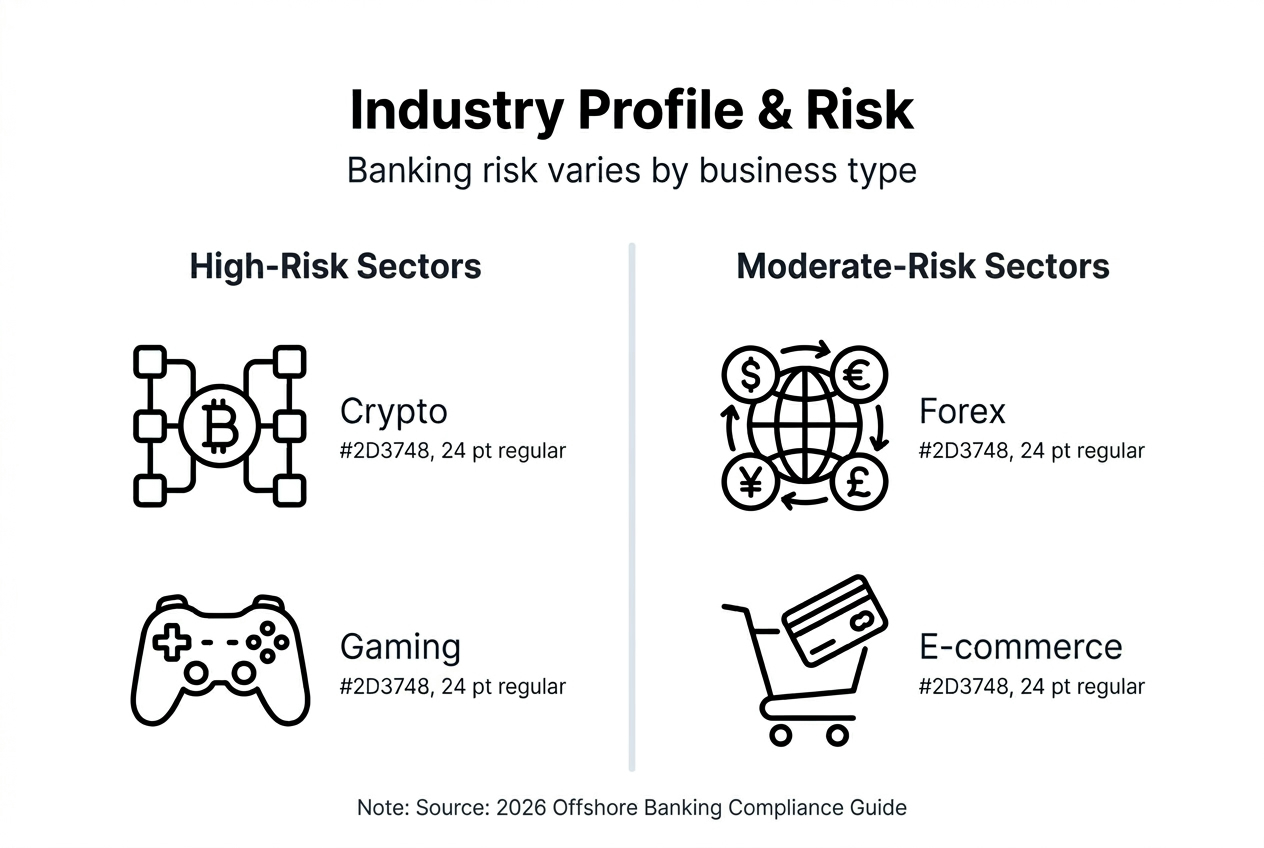
Cross-border enforcement trends matter because your business location, customer base, and banking jurisdiction create a compliance matrix. US enforcement reaches globally through dollar clearing dependencies. EU regulations extend through equivalent third-country assessments. Understanding these interconnections prevents nasty surprises after account opening.
Pro Tip: Before contacting banks, map your complete compliance posture including licences held, jurisdictions served, beneficial ownership structure, and transaction profiles. This preparation demonstrates professionalism and speeds due diligence.
Preparing essential documentation and selecting the right jurisdiction
Essential documentation is required for opening an offshore bank account and varies by institution and jurisdiction. Preparation determines whether your application proceeds smoothly or stalls in compliance review. High-risk businesses must provide enhanced documentation beyond standard corporate banking requirements.
Core documentation requirements include:
- Corporate formation documents (certificate of incorporation, memorandum and articles of association)
- Beneficial ownership declarations identifying all individuals holding 25% or greater stakes
- Director and shareholder identification (passport copies, proof of address dated within 90 days)
- Business plan detailing operations, revenue models, target markets, and compliance frameworks
- Financial projections and historical statements if the business is operational
- Licensing documentation specific to your sector (gaming licence, money services business registration, crypto exchange authorisation)
- Proof of business address and operational substance (lease agreements, utility bills, employee contracts)
- Source of funds documentation explaining capital origins and legitimacy
- Compliance policies covering AML, KYC, transaction monitoring, and suspicious activity reporting
- Banking history letters from existing providers (if available and positive)
The bank account opening checklist 2026 boost approval approach emphasises completeness over speed. Missing documents create delays that often result in applications expiring or being deprioritised.

Jurisdiction selection requires balancing regulatory friendliness with operational needs:
| Jurisdiction | Pros | Cons | Risk Level |
|---|---|---|---|
| Switzerland | Strong banking privacy, political stability, established frameworks | High costs, intensive due diligence, increasing US pressure | Medium |
| Singapore | Sophisticated financial sector, crypto-friendly regulation, Asian market access | Strict licensing requirements, detailed scrutiny, competitive applications | Medium |
| Cyprus | EU membership, crypto and forex experience, reasonable costs | Variable bank quality, historical financial instability perceptions | Medium-High |
| Malta | Gaming specialisation, EU access, English language | Over-saturation in gaming sector, some reputational concerns | Medium-High |
| Mauritius | Tax efficiency, African and Asian connectivity, flexible structures | Distance from major markets, limited banking options | Medium |
Your industry influences optimal jurisdiction choice. Gaming operators benefit from Malta or Cyprus expertise in that sector. Crypto businesses find Singapore or Switzerland more accommodating. Forex platforms may prefer Cyprus or Mauritius for regulatory frameworks aligned with leveraged trading.
Consider operational factors beyond compliance when selecting jurisdictions. Currency requirements matter if you primarily transact in euros, dollars, or pounds. Time zone differences affect customer support and banking communication. Political stability ensures your accounts remain accessible long-term.
Reviewing best offshore banks for crypto and gambling businesses reveals that institution selection within jurisdictions often matters more than jurisdiction itself. Some banks within favourable jurisdictions refuse high-risk sectors entirely whilst others specialise in serving them.
Pro Tip: Working with specialised compliance advisors who understand your sector and target jurisdictions dramatically reduces documentation iteration cycles and improves first-time approval rates.
Step-by-step offshore bank account opening process
The account opening process involves several steps that demand attention to detail and patience. High-risk businesses should expect longer timelines than standard corporate accounts due to enhanced due diligence requirements.
-
Research and shortlist suitable banks. Identify institutions with demonstrated high-risk sector experience and services matching your operational needs. Contact compliance or relationship managers directly to confirm they accept your specific business model before investing effort in applications.
-
Submit initial application package. Compile your complete documentation as outlined in the preparation section. Submit through formal channels with a cover letter summarising your business, compliance approach, and anticipated banking needs. Clarity and transparency at this stage set the tone for the entire relationship.
-
Respond to due diligence requests. Banks will request clarifications, additional documentation, or explanations of specific business aspects. Prompt, thorough responses demonstrate professionalism and keep applications moving. Delays in providing requested information often result in applications being shelved.
-
Complete enhanced compliance checks. Expect background checks on beneficial owners, directors, and key personnel. Some banks conduct site visits or video verification calls to confirm operational substance. Source of funds verification may require detailed transaction trails or third-party attestations.
-
Review and sign account agreements. Once approved, carefully review terms and conditions, fee schedules, and operational limitations. Understand transaction monitoring thresholds, reporting requirements, and circumstances that might trigger account reviews or restrictions.
-
Fund the account and activate services. Most banks require minimum opening deposits ranging from €10,000 to €50,000 depending on account type and jurisdiction. Initial funding source must align with your documented sources of capital. After funding, activate online banking, payment processing, and other required services.
Process timelines and requirements vary significantly:
| Bank Type | Typical Timeline | Key Requirements | Complexity |
|---|---|---|---|
| Traditional Offshore Bank | 8-12 weeks | Full documentation, in-person meetings possible, high minimums | High |
| Electronic Money Institution (EMI) | 3-6 weeks | Digital documentation, remote onboarding, moderate minimums | Medium |
| Crypto-Friendly Bank | 6-10 weeks | Enhanced AML, blockchain analytics, sector expertise verification | High |
| Specialised High-Risk Bank | 4-8 weeks | Industry-specific compliance, detailed business model review | Medium-High |
The how to open offshore forex account process exemplifies sector-specific variations. Forex operators must demonstrate client fund segregation, leverage limit compliance, and robust risk management frameworks that general banking applications might not require.
For crypto businesses, setting up offshore crypto banking 2026 guide considerations include blockchain transaction transparency, exchange security protocols, and custody arrangements that satisfy bank risk committees.
Maintaining momentum throughout the process requires organisation and responsiveness. Create a tracking system for all communications, requests, and submissions. Assign a dedicated team member to manage bank relationships and ensure nothing falls through the cracks.
Pro Tip: Maintaining transparency and providing context for your business model proactively addresses concerns before they become objections. Banks appreciate applicants who understand compliance requirements and demonstrate commitment to meeting them.
Handling common challenges and pitfalls in offshore banking
Complaints about account closures surged 44% in the UK in 2024, a trend continuing into 2026 as banks implement increasingly automated risk screening. High-risk businesses face unique challenges that extend beyond initial account opening into ongoing relationship management.
Over-compliance leads to freezing or terminating accounts of compliant businesses overnight. Automated transaction monitoring systems flag patterns associated with money laundering or sanctions evasion without contextual understanding. A sudden increase in transaction volume, even from legitimate business growth, can trigger freezes requiring extensive documentation to resolve.
Regulatory evasion through jurisdiction hopping creates long-term risks despite short-term banking access. Roobet exemplifies offshore crypto casino regulatory evasion by strategic jurisdiction selection. Whilst this approach may secure initial banking relationships, it ultimately increases enforcement scrutiny and the likelihood of sudden account terminations when regulatory pressure intensifies.
Common pitfalls to avoid include:
- Providing incomplete or inconsistent documentation across different bank applications
- Failing to maintain operational substance in your chosen jurisdiction
- Mixing personal and business transactions through corporate accounts
- Ignoring ongoing compliance reporting requirements after account opening
- Making sudden, unexplained changes to transaction patterns or volumes
- Operating in restricted jurisdictions or with sanctioned entities without prior bank notification
- Neglecting to update beneficial ownership or director information when changes occur
- Allowing licences or registrations to lapse whilst continuing operations
Account closure prevention requires proactive relationship management. Maintain regular communication with your relationship manager, especially before implementing significant business changes. Provide advance notice of anticipated transaction pattern shifts with supporting documentation explaining the business rationale.
“Banks close accounts not because they dislike your business model but because maintaining the relationship creates perceived compliance risk exceeding the relationship value. Managing this perception through transparency is essential.”
When facing compliance queries or account restrictions, respond immediately with comprehensive documentation. Delays signal either inability to provide legitimate explanations or lack of seriousness about compliance obligations. Both perceptions accelerate account closure decisions.
Understanding avoid high risk banking mistakes 2025 principles helps maintain stable banking relationships long-term. Regular self-audits identifying potential red flags before banks notice them demonstrate sophistication and commitment to compliance.
Investing in robust banking compliance high risk frameworks pays dividends through reduced account restrictions and closures. Transaction monitoring systems, staff training, and documented compliance procedures show banks you take regulatory obligations seriously.
Diversifying banking relationships across multiple institutions and jurisdictions provides resilience when individual accounts face issues. However, avoid opening accounts purely for redundancy without genuine operational need, as banks detect and penalise such behaviour.
How BankMyCapital can support your offshore banking needs
Navigating offshore banking complexity for high-risk sectors requires specialised expertise and established banking relationships. BankMyCapital connects crypto, gaming, forex, and other high-risk businesses with pre-vetted banking partners experienced in serving your specific industry.
Our approach addresses the challenges outlined throughout this guide through personalised support and regulatory alignment. We streamline approval processes by ensuring your documentation meets bank requirements before submission, reducing iteration cycles and accelerating onboarding timelines.
Key service benefits include:
- Access to over 50 banking partners and EMIs familiar with high-risk compliance requirements
- 87% approval rate through proper bank matching and application preparation
- Rapid onboarding averaging 2-3 weeks from complete documentation to account activation
- Comprehensive compliance support including jurisdiction selection and regulatory liaising
- Ongoing relationship management helping prevent account closures and restrictions
Whether you need guidance understanding what is high risk banking securing business 2026 fundamentals, a practical high risk business banking checklist success framework, or detailed advice on how to pass bank compliance for a high-risk business account, our specialised consultancy provides tailored solutions.
Taking proactive steps with professional assistance improves banking access and stability, allowing you to focus on growing your business rather than managing banking relationship crises.
Frequently asked questions
How do I choose the best offshore bank for my high-risk business?
Focus on jurisdiction stability, compliance reputation, and banking services tailored to your specific sector. Assess banks’ track records with regulatory adherence, prior high-risk industry experience, and client support quality. Banks with demonstrated expertise in crypto, gaming, or forex understand sector-specific compliance requirements and pose fewer approval obstacles.
What are the most common reasons offshore bank accounts get closed for high-risk sectors?
Over-compliance and automated risk filters often lead to account termination even without wrongdoing. Banks close accounts when perceived compliance risk exceeds relationship value, regardless of actual misconduct. Failure to provide requested documentation promptly or involvement in increased regulatory scrutiny of your sector also contributes significantly.
Can offshore banking help with crypto and forex business compliance in 2026?
Yes, offshore banks with proper licensing and compliance frameworks facilitate lawful transaction processing for crypto and forex operations. Selecting jurisdictions aligned with evolving rules in these sectors is critical to minimise enforcement risks. Banks experienced in blockchain analytics and leveraged trading understand regulatory requirements and help maintain compliant operations.
How long does offshore bank account opening typically take for high-risk businesses?
Timelines range from 3 to 12 weeks depending on bank type, jurisdiction, and application completeness. Traditional offshore banks require 8-12 weeks whilst EMIs often complete onboarding in 3-6 weeks. Enhanced due diligence for high-risk sectors extends timelines beyond standard corporate accounts, making prompt responses to information requests essential.
